Infinitive Verb Examples In Spanish / Infinitives Verb Infinitive And Verb Infinitive Or Gerund Verb Infinitive Agree Aim Afford Appear Arrange A Infinitive Verbs Verb Examples Verbs Lessons : If you are going to study, or to drive, or to cook, you are using infinitive verbs.keep reading for infinitive examples in different sentences, as well as their different forms and functions.
Infinitive Verb Examples In Spanish / Infinitives Verb Infinitive And Verb Infinitive Or Gerund Verb Infinitive Agree Aim Afford Appear Arrange A Infinitive Verbs Verb Examples Verbs Lessons : If you are going to study, or to drive, or to cook, you are using infinitive verbs.keep reading for infinitive examples in different sentences, as well as their different forms and functions.. In english, infinitive is usually used to refer to the to + verb form of the verb such as to run or to eat, although according to some authorities the infinitives are run and eat. To do so, you should first note that spanish verbs are made up of a stem and an ending. Oct 08, 2019 · the infinitive is a type of verbal, or word derived from a verb that does not function as a verb, that is almost always preceded by the particle to. Learn more about its correct usage and expand your writing capabilities. If you are going to study, or to drive, or to cook, you are using infinitive verbs.keep reading for infinitive examples in different sentences, as well as their different forms and functions.
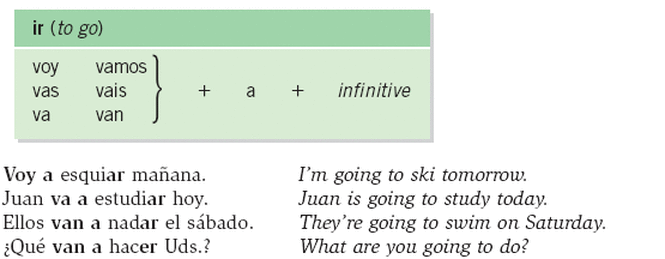
An infinitive verb can be used in different ways, even as a simple concept. Learn more about its correct usage and expand your writing capabilities. Infinitive phrases infinitives beginning with to and making up infinitive phrases are separate from prepositional phrases that use to (as in she drove to chicago) to describe movement. Read on to learn more about these phrases! Infinitives are the unconjugated “base forms” of spanish verbs that you see in dictionaries and grammar texts, and ir is the infinitive form of the verb “to go.” other infinitive forms you probably know are:
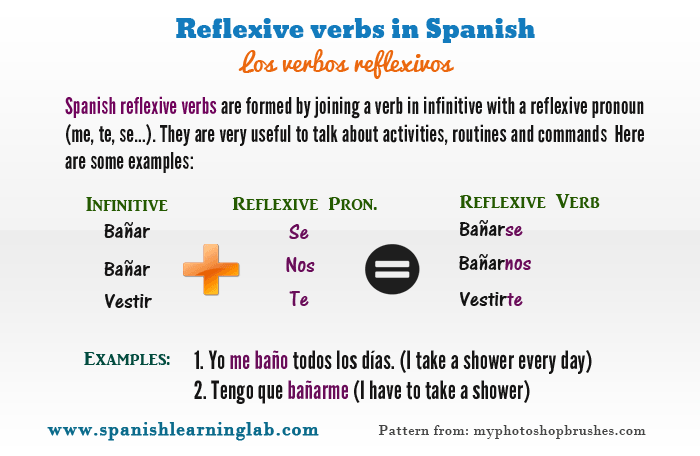 Conjugating And Using Spanish Reflexive Verbs Spanishlearninglab from www.spanishlearninglab.com
If you are going to study, or to drive, or to cook, you are using infinitive verbs.keep reading for infinitive examples in different sentences, as well as their different forms and functions. In their basic or infinitive form, all spanish verbs can have one of three endings: Infinitive phrases begin with infinitives. To do so, you should first note that spanish verbs are made up of a stem and an ending. The first step to conjugating spanish verbs is learning to categorize them. Infinitive phrases infinitives beginning with to and making up infinitive phrases are separate from prepositional phrases that use to (as in she drove to chicago) to describe movement. Oct 08, 2019 · the infinitive is a type of verbal, or word derived from a verb that does not function as a verb, that is almost always preceded by the particle to. In english, infinitive is usually used to refer to the to + verb form of the verb such as to run or to eat, although according to some authorities the infinitives are run and eat.
In english, infinitive is usually used to refer to the to + verb form of the verb such as to run or to eat, although according to some authorities the infinitives are run and eat.
To do so, you should first note that spanish verbs are made up of a stem and an ending. Infinitive phrases infinitives beginning with to and making up infinitive phrases are separate from prepositional phrases that use to (as in she drove to chicago) to describe movement. Infinitive phrases begin with infinitives. If you are going to study, or to drive, or to cook, you are using infinitive verbs.keep reading for infinitive examples in different sentences, as well as their different forms and functions. Read on to learn more about these phrases! Oct 08, 2019 · the infinitive is a type of verbal, or word derived from a verb that does not function as a verb, that is almost always preceded by the particle to. The first step to conjugating spanish verbs is learning to categorize them. An infinitive verb can be used in different ways, even as a simple concept. Infinitives are the unconjugated “base forms” of spanish verbs that you see in dictionaries and grammar texts, and ir is the infinitive form of the verb “to go.” other infinitive forms you probably know are: Learn more about its correct usage and expand your writing capabilities. An infinitive verb is the word to followed by a verb. Infinitives follow a to + verb construction. Many verb tenses use a form of the infinitive as the stem to which verb conjugation endings are attached.
In english, infinitive is usually used to refer to the to + verb form of the verb such as to run or to eat, although according to some authorities the infinitives are run and eat. Infinitives are the unconjugated “base forms” of spanish verbs that you see in dictionaries and grammar texts, and ir is the infinitive form of the verb “to go.” other infinitive forms you probably know are: Oct 08, 2019 · the infinitive is a type of verbal, or word derived from a verb that does not function as a verb, that is almost always preceded by the particle to. The first step to conjugating spanish verbs is learning to categorize them. This consists of the verb together with its objects and other complements and modifiers.
 A Guide To Stem Changing Verbs In Spanish from www.clozemaster.com
Infinitive phrases infinitives beginning with to and making up infinitive phrases are separate from prepositional phrases that use to (as in she drove to chicago) to describe movement. Learn more about its correct usage and expand your writing capabilities. This consists of the verb together with its objects and other complements and modifiers. In english, infinitive verbs are preceded by the word to, as in to speak, to read, or to write. In their basic or infinitive form, all spanish verbs can have one of three endings: Infinitives are the unconjugated “base forms” of spanish verbs that you see in dictionaries and grammar texts, and ir is the infinitive form of the verb “to go.” other infinitive forms you probably know are: An infinitive phrase is a verb phrase constructed with the verb in infinitive form. Infinitives follow a to + verb construction.
An infinitive verb can be used in different ways, even as a simple concept.
This consists of the verb together with its objects and other complements and modifiers. An infinitive verb is the word to followed by a verb. Estudiar (to study), gustar (to be pleasing ), bailar (to dance), comer (to eat) and vivir (to live). Read on to learn more about these phrases! Infinitives are the unconjugated “base forms” of spanish verbs that you see in dictionaries and grammar texts, and ir is the infinitive form of the verb “to go.” other infinitive forms you probably know are: Many verb tenses use a form of the infinitive as the stem to which verb conjugation endings are attached. Infinitive phrases begin with infinitives. In english, infinitive is usually used to refer to the to + verb form of the verb such as to run or to eat, although according to some authorities the infinitives are run and eat. To do so, you should first note that spanish verbs are made up of a stem and an ending. In english, infinitive verbs are preceded by the word to, as in to speak, to read, or to write. Infinitives follow a to + verb construction. Oct 08, 2019 · the infinitive is a type of verbal, or word derived from a verb that does not function as a verb, that is almost always preceded by the particle to. An infinitive phrase is a verb phrase constructed with the verb in infinitive form.
The first step to conjugating spanish verbs is learning to categorize them. Learn more about its correct usage and expand your writing capabilities. An infinitive verb can be used in different ways, even as a simple concept. Many verb tenses use a form of the infinitive as the stem to which verb conjugation endings are attached. If you are going to study, or to drive, or to cook, you are using infinitive verbs.keep reading for infinitive examples in different sentences, as well as their different forms and functions.
 Spanish Reflexive Verbs Part I General Concepts Convospanish from convospanish.com
The first step to conjugating spanish verbs is learning to categorize them. An infinitive verb is the word to followed by a verb. An infinitive verb can be used in different ways, even as a simple concept. Estudiar (to study), gustar (to be pleasing ), bailar (to dance), comer (to eat) and vivir (to live). Infinitive phrases infinitives beginning with to and making up infinitive phrases are separate from prepositional phrases that use to (as in she drove to chicago) to describe movement. Infinitives follow a to + verb construction. An infinitive phrase is a verb phrase constructed with the verb in infinitive form. In english, infinitive verbs are preceded by the word to, as in to speak, to read, or to write.
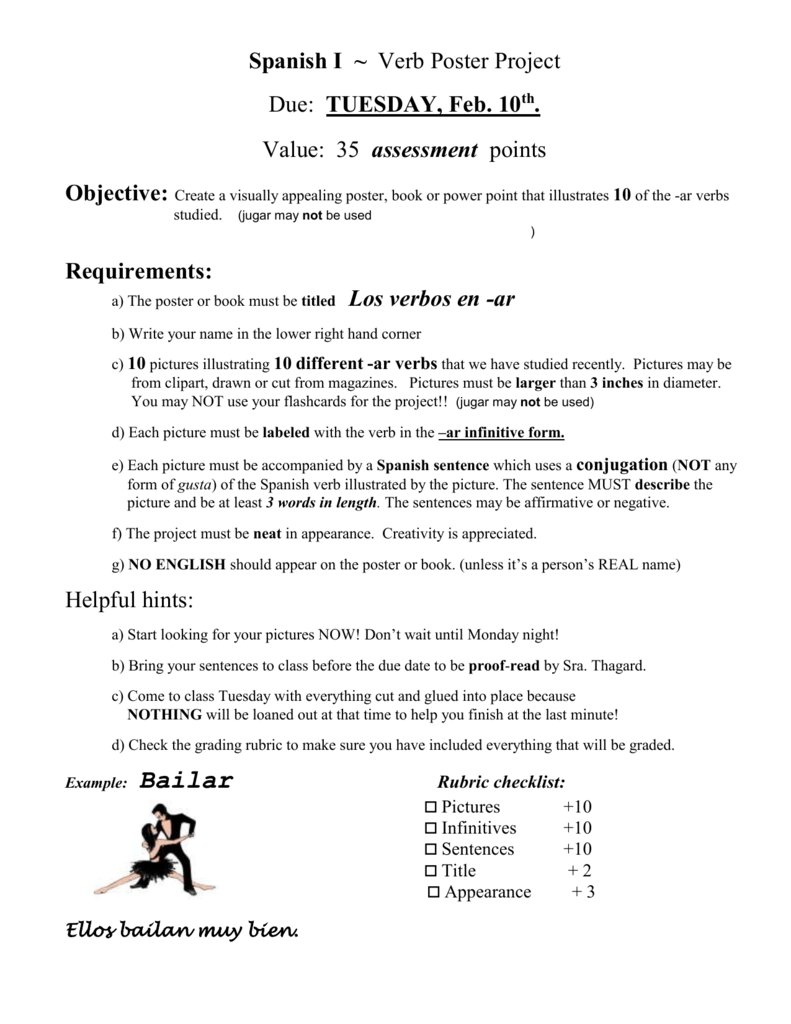
Estudiar (to study), gustar (to be pleasing ), bailar (to dance), comer (to eat) and vivir (to live).
Read on to learn more about these phrases! In english, infinitive is usually used to refer to the to + verb form of the verb such as to run or to eat, although according to some authorities the infinitives are run and eat. Infinitives follow a to + verb construction. An infinitive verb is the word to followed by a verb. Infinitive phrases begin with infinitives. An infinitive phrase is a verb phrase constructed with the verb in infinitive form. In their basic or infinitive form, all spanish verbs can have one of three endings: To do so, you should first note that spanish verbs are made up of a stem and an ending. Many verb tenses use a form of the infinitive as the stem to which verb conjugation endings are attached. Estudiar (to study), gustar (to be pleasing ), bailar (to dance), comer (to eat) and vivir (to live). Infinitives are the unconjugated “base forms” of spanish verbs that you see in dictionaries and grammar texts, and ir is the infinitive form of the verb “to go.” other infinitive forms you probably know are: The first step to conjugating spanish verbs is learning to categorize them. Oct 08, 2019 · the infinitive is a type of verbal, or word derived from a verb that does not function as a verb, that is almost always preceded by the particle to.
If you are going to study, or to drive, or to cook, you are using infinitive verbskeep reading for infinitive examples in different sentences, as well as their different forms and functions infinitive verb example Many verb tenses use a form of the infinitive as the stem to which verb conjugation endings are attached.

In their basic or infinitive form, all spanish verbs can have one of three endings: An infinitive verb is the word to followed by a verb. Read on to learn more about these phrases! Infinitive phrases infinitives beginning with to and making up infinitive phrases are separate from prepositional phrases that use to (as in she drove to chicago) to describe movement. Infinitives are the unconjugated “base forms” of spanish verbs that you see in dictionaries and grammar texts, and ir is the infinitive form of the verb “to go.” other infinitive forms you probably know are:

Infinitive phrases begin with infinitives. In their basic or infinitive form, all spanish verbs can have one of three endings: Read on to learn more about these phrases! Infinitives follow a to + verb construction. Oct 08, 2019 · the infinitive is a type of verbal, or word derived from a verb that does not function as a verb, that is almost always preceded by the particle to.
In their basic or infinitive form, all spanish verbs can have one of three endings: Infinitive phrases infinitives beginning with to and making up infinitive phrases are separate from prepositional phrases that use to (as in she drove to chicago) to describe movement. In english, infinitive verbs are preceded by the word to, as in to speak, to read, or to write. An infinitive phrase is a verb phrase constructed with the verb in infinitive form. Estudiar (to study), gustar (to be pleasing ), bailar (to dance), comer (to eat) and vivir (to live).
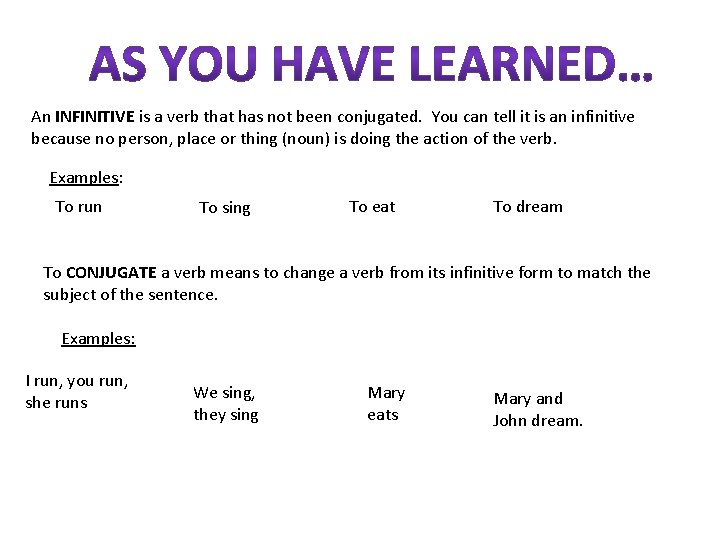
This consists of the verb together with its objects and other complements and modifiers. Estudiar (to study), gustar (to be pleasing ), bailar (to dance), comer (to eat) and vivir (to live). Infinitives follow a to + verb construction. Infinitives are the unconjugated “base forms” of spanish verbs that you see in dictionaries and grammar texts, and ir is the infinitive form of the verb “to go.” other infinitive forms you probably know are: Infinitive phrases infinitives beginning with to and making up infinitive phrases are separate from prepositional phrases that use to (as in she drove to chicago) to describe movement.
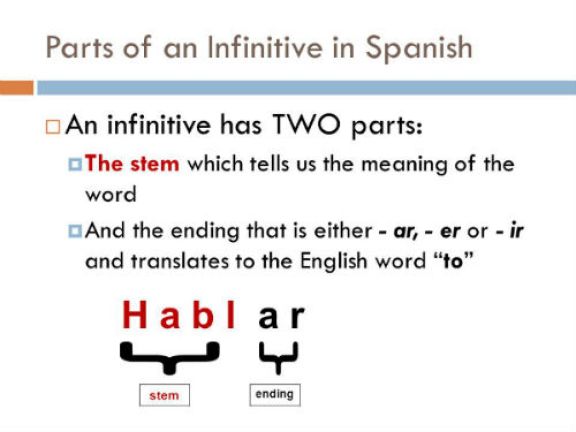
Infinitive phrases infinitives beginning with to and making up infinitive phrases are separate from prepositional phrases that use to (as in she drove to chicago) to describe movement. In their basic or infinitive form, all spanish verbs can have one of three endings: Infinitives follow a to + verb construction. This consists of the verb together with its objects and other complements and modifiers. The first step to conjugating spanish verbs is learning to categorize them.
Source: lh4.googleusercontent.com
Many verb tenses use a form of the infinitive as the stem to which verb conjugation endings are attached. Infinitive phrases infinitives beginning with to and making up infinitive phrases are separate from prepositional phrases that use to (as in she drove to chicago) to describe movement. Learn more about its correct usage and expand your writing capabilities. In their basic or infinitive form, all spanish verbs can have one of three endings: An infinitive verb can be used in different ways, even as a simple concept.

An infinitive phrase is a verb phrase constructed with the verb in infinitive form. Estudiar (to study), gustar (to be pleasing ), bailar (to dance), comer (to eat) and vivir (to live). Infinitive phrases begin with infinitives. In their basic or infinitive form, all spanish verbs can have one of three endings: This consists of the verb together with its objects and other complements and modifiers.
Source: lh3.googleusercontent.com
In their basic or infinitive form, all spanish verbs can have one of three endings: In english, infinitive is usually used to refer to the to + verb form of the verb such as to run or to eat, although according to some authorities the infinitives are run and eat. Learn more about its correct usage and expand your writing capabilities. Infinitive phrases begin with infinitives. In english, infinitive verbs are preceded by the word to, as in to speak, to read, or to write.
Oct 08, 2019 · the infinitive is a type of verbal, or word derived from a verb that does not function as a verb, that is almost always preceded by the particle to. In english, infinitive is usually used to refer to the to + verb form of the verb such as to run or to eat, although according to some authorities the infinitives are run and eat. Learn more about its correct usage and expand your writing capabilities. Many verb tenses use a form of the infinitive as the stem to which verb conjugation endings are attached. Infinitives follow a to + verb construction.
Learn more about its correct usage and expand your writing capabilities.
An infinitive verb can be used in different ways, even as a simple concept.
/ThoughtCoChalkboard9-5b35491446e0fb003ebe4128.png "Example Sentences Using Irregular Verbs In All Tenses")
Infinitive phrases infinitives beginning with to and making up infinitive phrases are separate from prepositional phrases that use to (as in she drove to chicago) to describe movement.
Source: www.cliffsnotes.com
In english, infinitive is usually used to refer to the to + verb form of the verb such as to run or to eat, although according to some authorities the infinitives are run and eat.
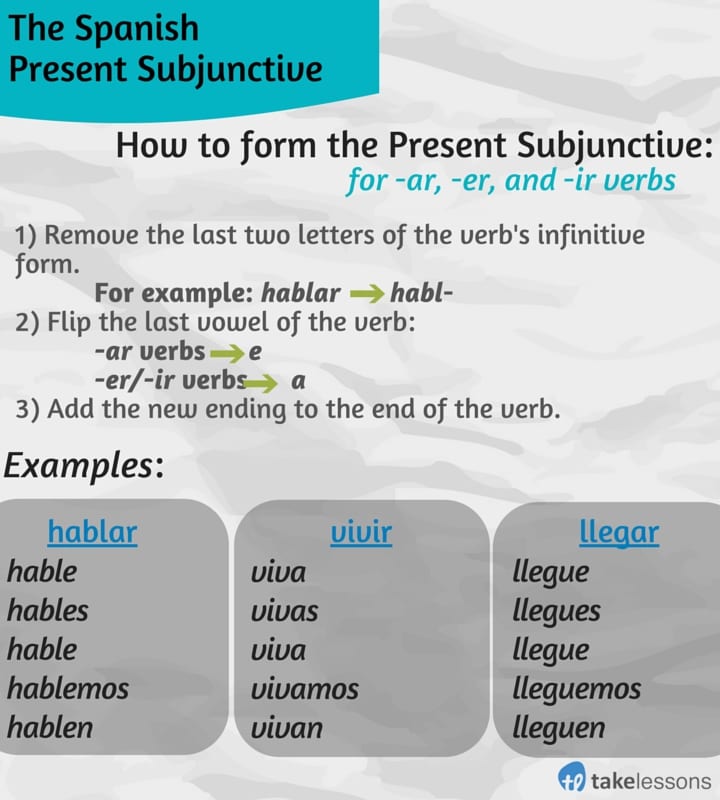
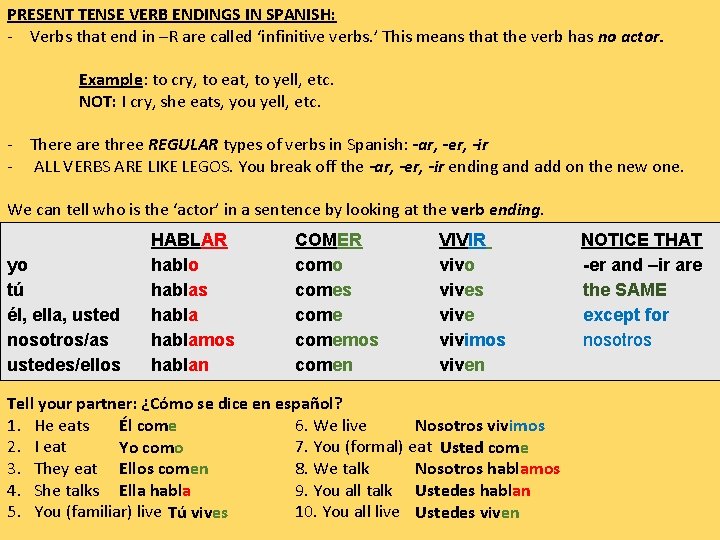
In their basic or infinitive form, all spanish verbs can have one of three endings:
In english, infinitive is usually used to refer to the to + verb form of the verb such as to run or to eat, although according to some authorities the infinitives are run and eat.
Infinitives follow a to + verb construction.
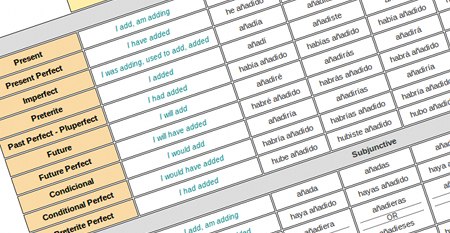
Oct 08, 2019 · the infinitive is a type of verbal, or word derived from a verb that does not function as a verb, that is almost always preceded by the particle to.

An infinitive verb is the word to followed by a verb.

In english, infinitive is usually used to refer to the to + verb form of the verb such as to run or to eat, although according to some authorities the infinitives are run and eat.

Read on to learn more about these phrases!
Source: www.cliffsnotes.com
Infinitives follow a to + verb construction.
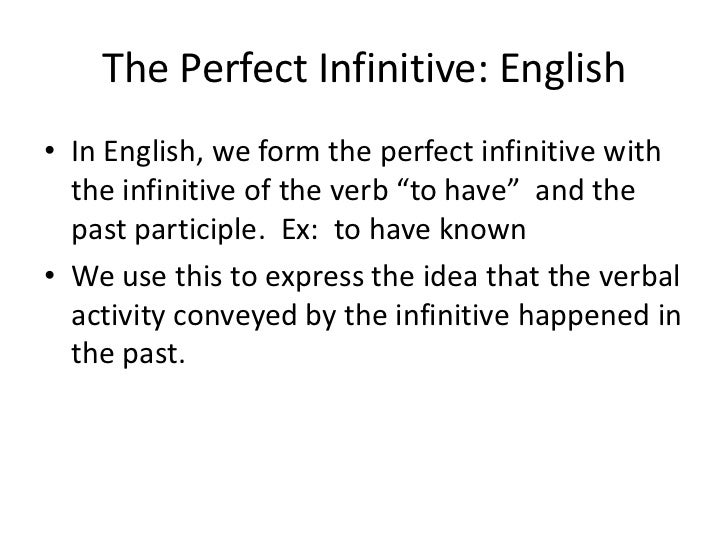
The first step to conjugating spanish verbs is learning to categorize them.

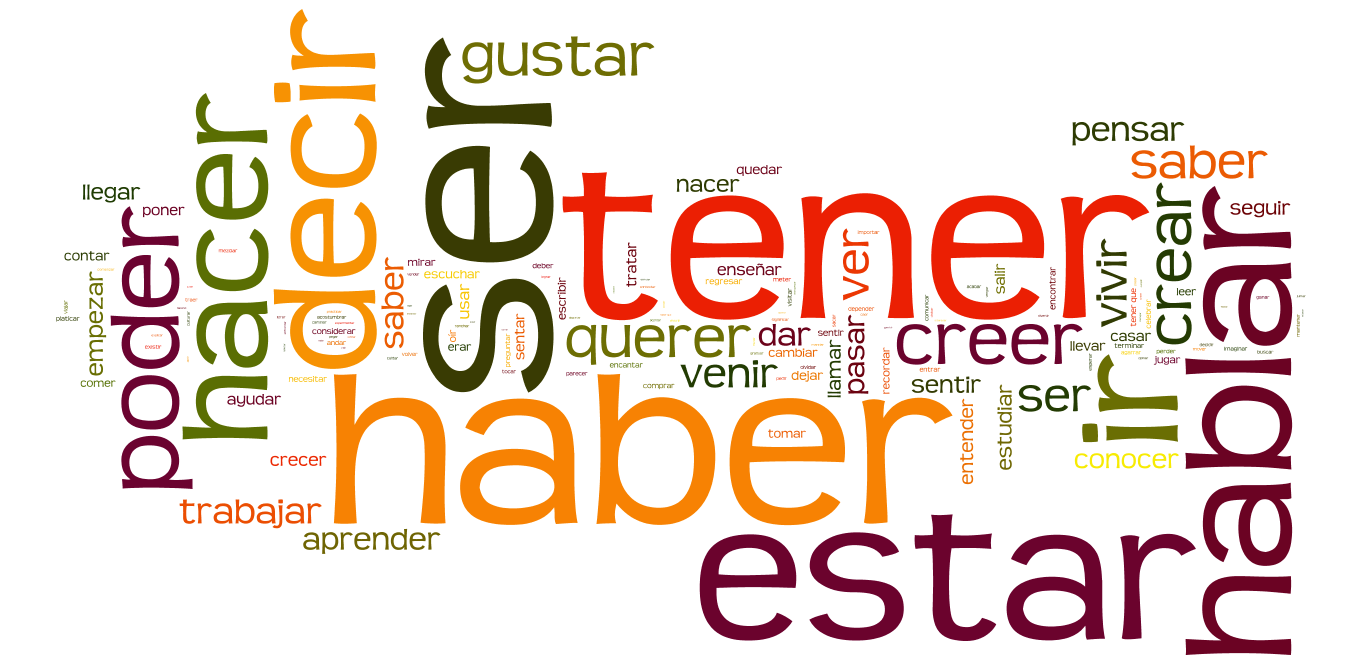
Infinitives are the unconjugated “base forms” of spanish verbs that you see in dictionaries and grammar texts, and ir is the infinitive form of the verb “to go.” other infinitive forms you probably know are:

The first step to conjugating spanish verbs is learning to categorize them.
Source: www.cliffsnotes.com
Infinitive phrases begin with infinitives.
Infinitives are the unconjugated “base forms” of spanish verbs that you see in dictionaries and grammar texts, and ir is the infinitive form of the verb “to go.” other infinitive forms you probably know are:
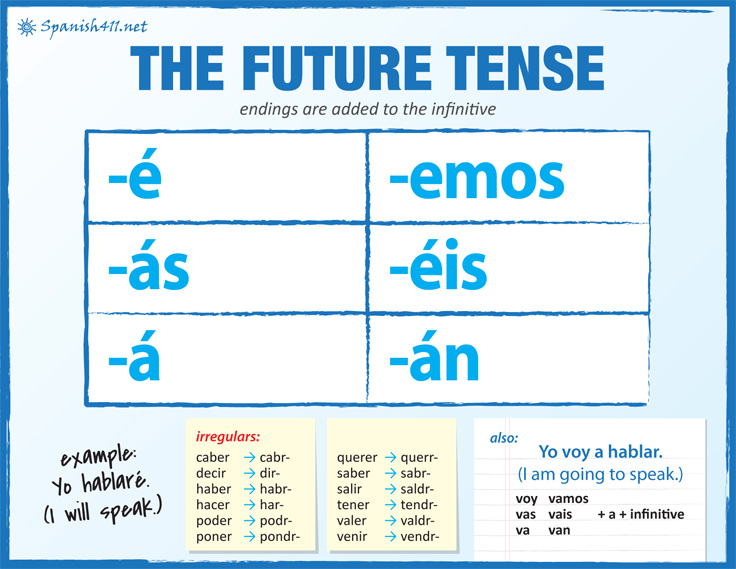
Infinitives are the unconjugated “base forms” of spanish verbs that you see in dictionaries and grammar texts, and ir is the infinitive form of the verb “to go.” other infinitive forms you probably know are:
This consists of the verb together with its objects and other complements and modifiers.

Oct 08, 2019 · the infinitive is a type of verbal, or word derived from a verb that does not function as a verb, that is almost always preceded by the particle to.
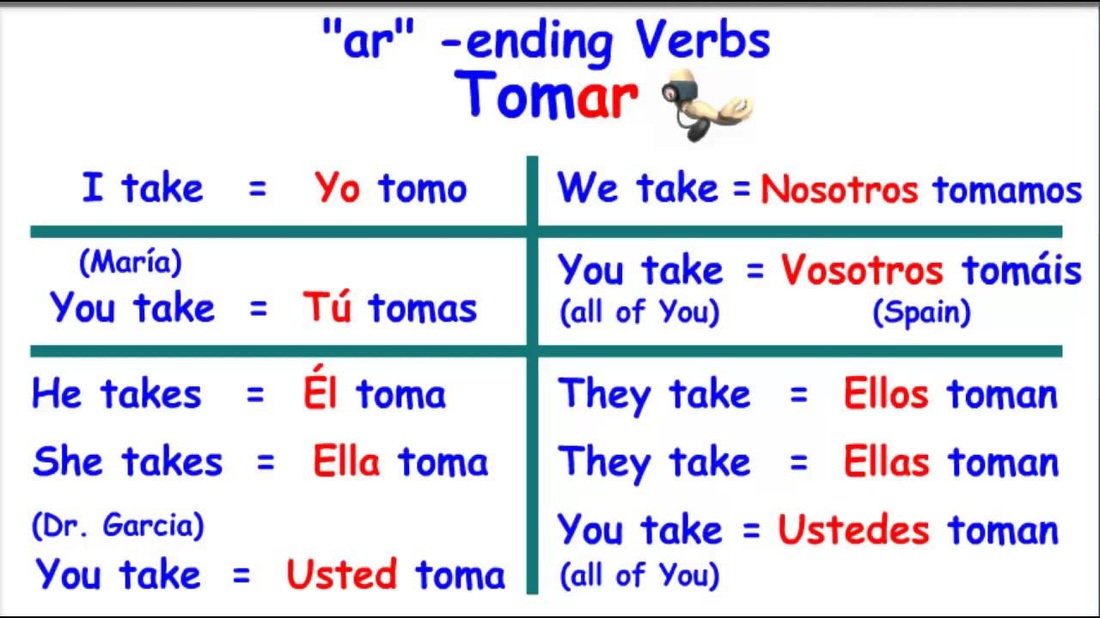
Estudiar (to study), gustar (to be pleasing ), bailar (to dance), comer (to eat) and vivir (to live).
The first step to conjugating spanish verbs is learning to categorize them.

An infinitive phrase is a verb phrase constructed with the verb in infinitive form.
Source: www.cliffsnotes.com
This consists of the verb together with its objects and other complements and modifiers.
An infinitive verb is the word to followed by a verb.